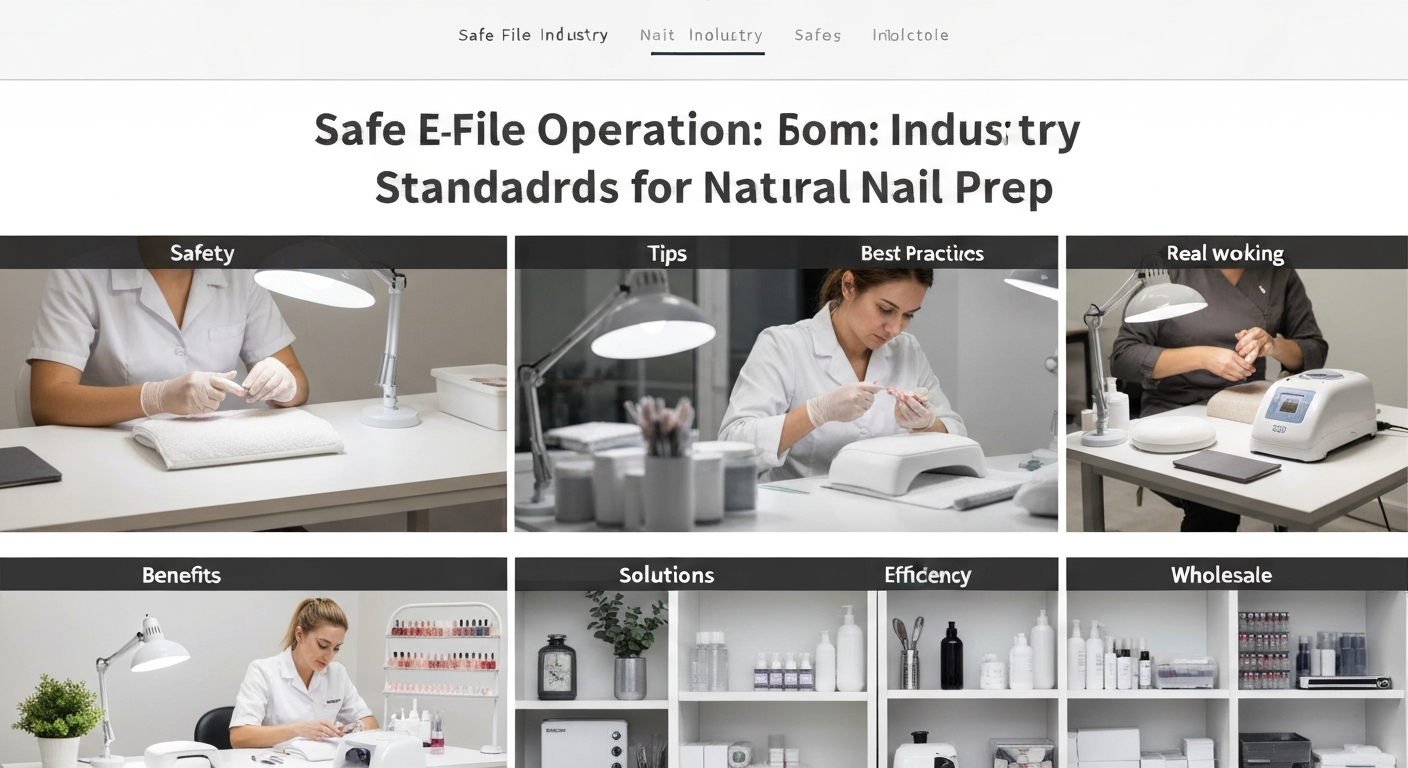
Safe E-File Operation: Industry Standards for Natural Nail Prep
Electric files are essential tools in the modern nail salon. However, improper use causes severe damage to the natural nail plate.
Professional nail technicians must master torque, speed, and pressure to ensure client safety.
This guide outlines the industry standards for performing dry manicures and prep work using an e-file.
Choosing the Correct Diamond Bits
Not all drill bits are suitable for the natural nail. Carbides should never touch the natural nail plate.
For cuticle work and nail plate preparation, strictly use high-quality diamond bits.
Understanding Grit Coding
- Yellow Band (Extra Fine): Best for thin, sensitive, or elderly skin types.
- Red Band (Fine): The industry standard for general cuticle work and pterygium removal.
- Blue Band (Medium): Use cautiously on callused skin; avoid heavy contact with the nail plate.
Inspect your bits daily. Worn-out diamond coating forces you to apply more pressure, creating heat and damage.
Proper RPM Speeds for Natural Nails
High speed does not equal better results when working on the natural nail. Excessive speed generates heat spikes.
Control is more important than power during the prep phase.
Recommended Speed Zones
- Cuticle Lifting (Forward/Reverse): 5,000 to 7,000 RPM.
- Pterygium Exfoliation: 7,000 to 10,000 RPM.
- Skin Polishing (Silicon bits): 3,000 to 5,000 RPM.
Never exceed 12,000 RPM when the bit is in contact with the natural nail plate.
Hand Piece Angles and Pressure
The “Ring of Fire” is the most common injury in nail salons. It is caused by improper angles, not just the bit itself.
Holding the bit at a sharp angle cuts into the nail plate rather than exfoliating the dead tissue.
The Parallel Rule
Keep the diamond bit parallel to the nail plate at all times. The belly of the bit should do the work.
Do not dig the nose of the flame bit into the sinus. This causes matrix damage and washboarding.
Feather-Light Touch
Let the e-file motor do the work. If you feel the need to press down, your RPM is too low or your bit is dull.
Apply zero downward pressure. Glide the bit over the surface to remove non-living tissue.
Sanitation Standards for Diamond Bits
Infection control is non-negotiable in professional nail operations. Diamond bits retain skin cells easily.
Follow this strict cleaning workflow between every client:
- Step 1: Remove dust using a wire brass brush.
- Step 2: Wash with soap and water to remove debris.
- Step 3: Immerse in hospital-grade disinfectant for the required time (usually 10 minutes).
- Step 4: Dry thoroughly and store in a covered, clean container or sterilization pouch.
By adhering to these standards, you protect your client’s nail health and your salon’s reputation.
