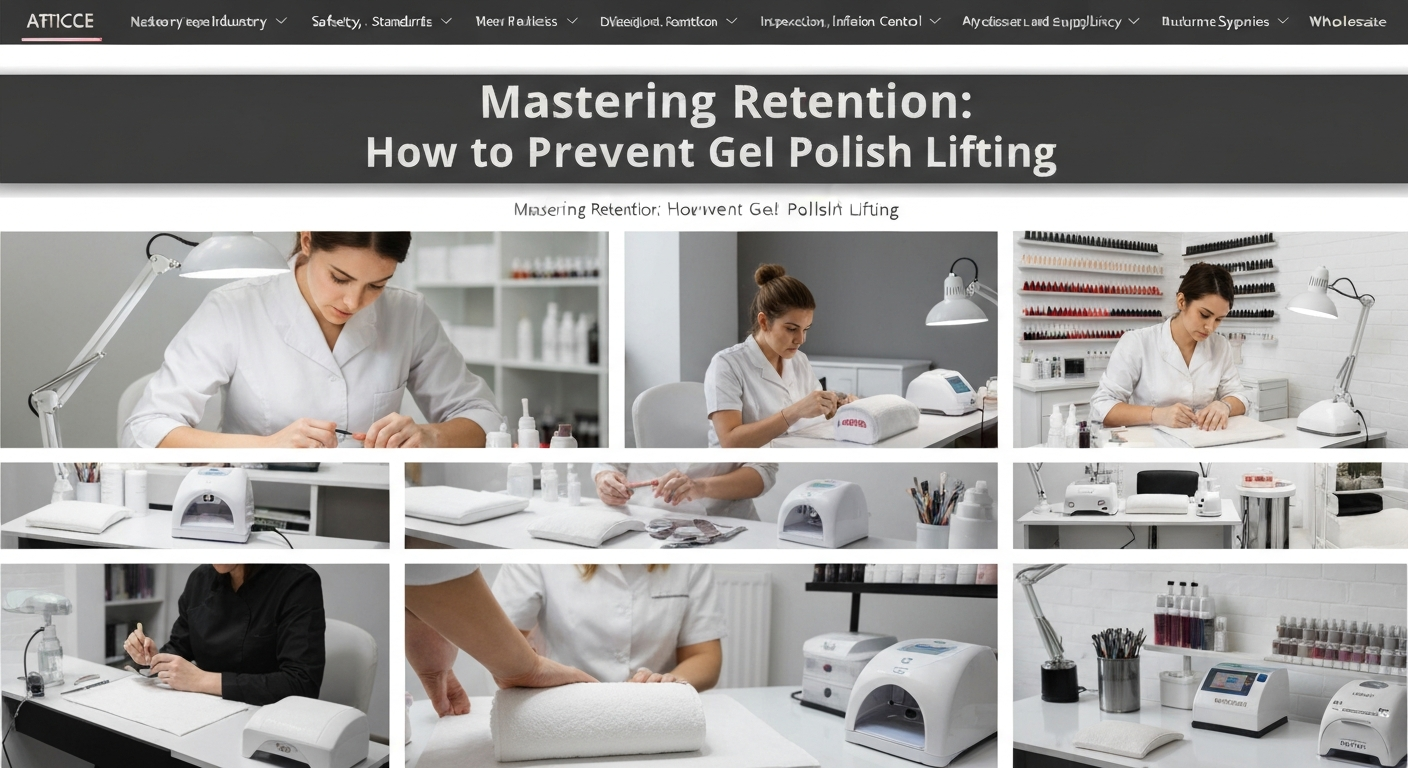
Mastering Retention: How to Prevent Gel Polish Lifting
For professional nail technicians, service breakdown is a primary concern. Nothing damages client loyalty faster than a set of nails that lifts after a few days.
Lifting is rarely a product fault; it is almost always an issue with preparation or application technique. Mastering retention requires a strict adherence to chemical principles and mechanical adhesion.
This guide outlines the professional standards for ensuring gel polish adheres securely to the natural nail plate for 3+ weeks.
The Foundation: Precision Nail Plate Preparation
The majority of lifting issues originate during the prep phase. If the foundation is unstable or contaminated, the product cannot bond.
Removing True Cuticle
Many technicians confuse the eponychium (living skin) with the cuticle (dead skin on the nail plate). Pushing back the proximal fold is not enough.
You must exfoliate the translucent layer of non-living tissue attached to the nail plate. Even a microscopic amount of cuticle left on the nail will cause the gel to detach.
Professional Tip: Use a curette or a specialized diamond cuticle bit with an e-file at low RPM to gently lift and remove this tissue from the nail plate and lateral folds.
Surface Dehydration and Etching
Gel products require a textured surface for mechanical adhesion. A completely smooth or shiny nail plate offers no grip for the base coat.
- Gently remove the surface shine using a 180 or 240-grit buffer or file.
- Focus on the cuticle area and side walls where lifting usually starts.
- Avoid over-filing, which thins the nail and makes it flexible, leading to separation.
Once etched, the nail must be chemically dehydrated. Use a pure cleanser or 99% Isopropyl Alcohol to scrub the nail plate. This removes dust, oils, and moisture.
Chemical Bonding Agents
Understanding when and how to use primers is essential for problem lifters. Not every client needs an acid-based primer, but many need assistance.
Bonders and Primers
Non-Acid Primers: Act as double-sided tape. They leave a sticky layer that bonds the keratin to the gel. Suitable for most clients.
Acid Primers: Use methacrylic acid to chemically etch the nail. Use sparingly and only for clients with severe lifting issues or oily nail plates.
Apply these products thinly. Flooding the cuticle with primer can actually cause lifting or chemical burns.
Application Techniques to Stop Lifting
Once the nail is prepped, your application technique dictates the longevity of the manicure.
The Margin of Safety
Product touching the skin is the number one cause of immediate lifting. Once cured, gel that touches the skin creates a ledge. Water and oil enter this ledge, forcing the product up.
Leave a tiny margin (hairline space) between the product and the proximal nail fold and lateral sidewalls. This ensures the seal is entirely on the solid nail plate.
Capping the Free Edge
Shrinkage occurs as gel polymerizes. If the free edge is not sealed, the gel pulls back, exposing the natural nail.
Run your brush along the distal edge of the nail with every layer—base, color, and top coat. This wraps the product around the nail, preventing separation at the tip.
Curing and Equipment Standards
Under-cured product leads to lifting and potential allergies. Your lamp is the engine of your service.
Lamp Compatibility
Ensure your LED or UV lamp is compatible with your specific gel brand. Wavelengths (measured in nanometers) must match the photo-initiators in your gel.
If a lamp is too weak or the bulbs are old, the lower layers of gel may remain soft. This causes the hard top layer to detach from the uncured base layer.
Hand Placement
Instruct clients on proper hand placement. If they tilt their fingers, the light cannot penetrate the sidewalls properly, leading to under-curing at the edges.
Thumbs should often be cured separately to ensure the light hits the nail plate directly from above, rather than at an angle.
Troubleshooting Common Scenarios
If a client returns with lifting, analyze the location of the lift to determine the cause.
Cuticle Lifting: usually indicates poor prep or product touching the skin.
Free Edge Lifting: suggests the client uses their nails as tools, or the free edge was not capped.
Center Pocket Lifting: often indicates the nail plate is too flexible for the product, or the lamp did not cure the base layer fully.
By strictly following these sanitation and application protocols, you can guarantee a higher standard of service and minimize breakdown in your nail salon.
