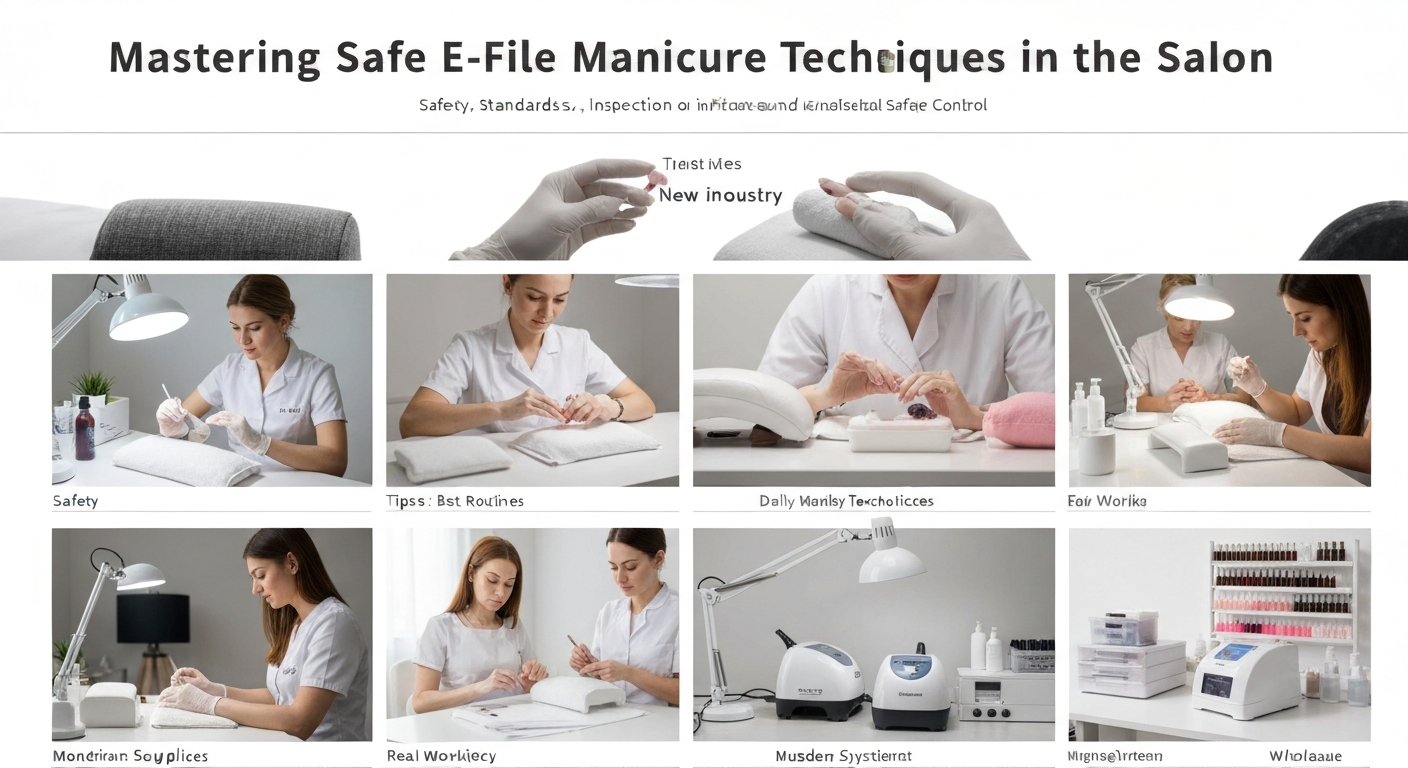
Mastering Safe E-File Manicure Techniques in the Salon
The transition from traditional water manicures to dry e-file processing is an industry standard.
For professional nail technicians, mastering the electric file is not just about speed.
It is about precision, adhesion, and maintaining the integrity of the natural nail plate.
Understanding the Dry Manicure Necessity
Water expands the porous structure of the natural nail plate.
When nails absorb moisture, they change shape, causing gel and acrylic products to lift later.
A dry e-file manicure ensures the nail plate remains stable during product application.
This technique also allows for deeper cleaning of the proximal nail fold.
By removing non-living tissue effectively, you can apply color closer to the cuticle line.
This results in a manicure that looks fresh for weeks, not just days.
Selecting the Correct Diamond Bits
Using the wrong grit on natural nails is the leading cause of service breakdown and injury.
Nail professionals should strictly use diamond bits for natural nail preparation.
Carbide or ceramic bits are too aggressive for cuticle work and should be reserved for product removal.
Grit Classifications for Natural Nails
- Yellow Band (Extra Fine): Best for thin, sensitive skin or elderly clients.
- Red Band (Fine): The industry standard for general cuticle processing.
- Blue Band (Medium): Use only on callous skin or very tough lateral folds.
Avoid green or black band diamond bits on the natural nail plate.
These grits are too coarse and can easily cause “rings of fire” or matrix damage.
Inspect your bits daily for wear and concentricity to ensure smooth rotation.
Proper RPM Speeds and Hand Positioning
Running your e-file at full speed during cuticle prep is a dangerous practice.
High speeds generate friction heat and reduce your control over the handpiece.
Control is more valuable than torque when working near living tissue.
Recommended RPM Ranges:
- Cuticle Lifting: 7,000 to 10,000 RPM (Forward or Reverse depending on direction).
- Skin Polishing: 5,000 to 8,000 RPM (using a silicone or ball bit).
- Product Removal: 15,000+ RPM (using carbide bits).
Always anchor your pinky finger against the client’s hand or finger.
This fulcrum provides the stability needed to prevent the bit from skipping.
Never float your hand; stability is the key to safety in nail services.
The 90-Degree Angle Myth vs. Reality
Many new technicians hold the bit incorrectly, digging into the nail plate.
The working part of a flame bit is the “belly,” not the point.
Keep the bit parallel to the nail plate when cleaning the lateral folds.
When working on the proximal nail fold, the angle should be minimal.
The goal is to lift the skirt of the eponychium, not to file a groove into the nail.
Applying pressure to the nail plate stops capillary blood flow and damages the keratin layers.
Sanitation Standards for E-File Bits
Infection control is critical when using rotary tools in a salon environment.
Diamond bits accumulate microscopic skin cells and pathogens quickly.
Simply spraying bits with alcohol is not sufficient for salon standards.
Step-by-Step Bit Disinfection
- Cleaning: Scrub bits with a wire brush and soap to remove debris.
- Immersion: Soak in an EPA-registered hospital-grade disinfectant for the required time.
- Drying: Ensure bits are completely dry to prevent rust.
- Storage: Store in a covered, clean container until the next service.
Acetone is not a disinfectant and does not kill blood-borne pathogens.
Always follow your state board regulations regarding sterilization and autoclaving.
Protect your license and your clients by adhering to strict hygiene protocols.
Improving Gel Retention with E-Filing
Proper e-file prep creates the ideal canvas for adhesion.
By removing the true cuticle (dead tissue) from the nail plate, you prevent lifting.
Gel polish cannot bond to skin; it must bond to keratin.
After e-filing, always cleanse the nail with pure alcohol or a dehydrator.
This removes the dust and oils released during the filing process.
Your application is only as good as your preparation.
