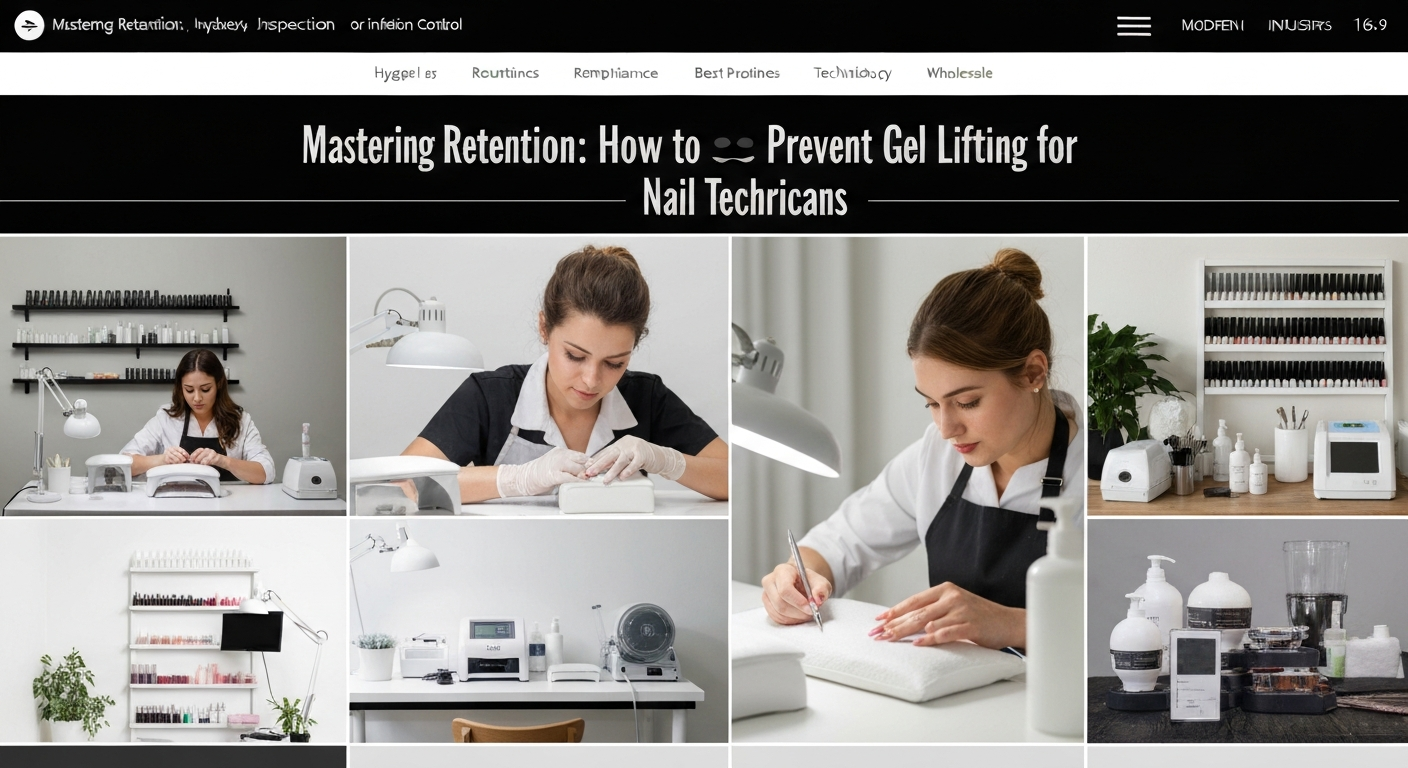
Mastering Retention: How to Prevent Gel Lifting for Nail Technicians
For any professional nail technician, client retention depends heavily on product retention. Nothing damages a nail salon’s reputation faster than a gel manicure that peels after a few days.
Lifting is often caused by improper preparation or application errors rather than the product itself. Mastering the chemistry and mechanics of adhesion is essential for salon success.
Follow these industry-standard best practices to troubleshoot lifting and guarantee long-lasting results for your clients.
1. Perfection in Nail Plate Preparation
The foundation of every long-lasting service is thorough preparation. Oil and dead tissue are the primary enemies of adhesion in any nail enhancement system.
You must differentiate between the eponychium (living skin) and the true cuticle (dead tissue on the nail plate). Gel products will not bond to skin or dead tissue.
Step-by-Step Dry Prep
- Sanitize hands: Ensure both you and the client have clean, dry hands before touching any tools.
- Push back the eponychium: Use a professional pusher to gently expose the new growth area.
- Remove the true cuticle: Use a curette or an electric file with a diamond bit to remove the invisible layer of dead skin from the nail plate.
- Remove surface shine: Gently buff the nail plate with a 180 or 240-grit buffer to create texture for the product to grip.
2. Chemical Dehydration and Priming
Once the physical preparation is complete, you must alter the chemical surface of the natural nail. This step ensures the nail plate is pH-balanced and ready for bonding.
Always use a pure cleanser (often isopropyl alcohol or acetone-based) to remove dust and debris. Do not let the client touch their hair or face after this step.
Using Bonders Correctly
Apply a nail dehydrator to remove surface moisture and oils. The nail should appear chalky white immediately after application.
Follow with a primer suited to your specific gel system. Use a non-acid primer for standard gel manicures to act as double-sided sticky tape for the base coat.
Avoid flooding the cuticle with primer. A thin, sparing amount is sufficient for maximum adhesion without causing chemical burns or lifting.
3. Proper Base Coat Application
The base coat is the anchor for your entire service. Applying it too thickly is a common mistake that leads to side-wall lifting.
Scrub the base coat into the nail plate using your brush. This “scrubbing” motion forces the gel into the keratin layers you opened up during buffering.
4. Capping the Free Edge
Shrinkage occurs naturally as gel polymerizes under UV or LED light. If the free edge is not sealed, the gel will pull back, exposing the natural nail to water and trauma.
Cap the free edge with every layer: base coat, color, and top coat. This creates a complete seal that wraps the product around the nail tip.
For clients with short nails, use a thin detail brush to cap the edge without getting product on the hyponychium (skin under the free edge).
5. Curing Lamp Maintenance and Hand Placement
Undercured gel is a leading cause of service breakdown and allergies. Your equipment must be up to salon safety standards.
Ensure your lamp’s wavelength matches your gel system (usually 365nm to 405nm). If using a battery-operated unit, keep it fully charged to maintain consistent light intensity.
Client Hand Placement
- Instruct clearly: Tell clients to place their hand flat, centered, and pushed all the way forward.
- Check the thumbs: Cure thumbs separately if your lamp is small, or ensure the client does not tilt their thumb sideways.
- Clean the bulbs: Cured gel residue on the bulbs blocks UV light, leading to soft, undercured nails that lift easily.
6. Avoiding Skin Contact
Any gel that touches the sidewalls or proximal nail fold acts as a leverage point. As the nail grows, that bridge of product will pull away, creating a pocket for lifting.
Leave a tiny margin (hairline gap) between the product and the skin. This ensures a clean grow-out and prevents water from seeping under the enhancement.
If you accidentally flood the cuticle, clean it immediately with a detail brush dipped in alcohol before curing. Once cured, the mistake is permanent and will cause lifting.
Summary: By adhering to strict sanitation, precise cuticle work, and controlled application, you can eliminate lifting problems in your nail salon and increase client loyalty.
